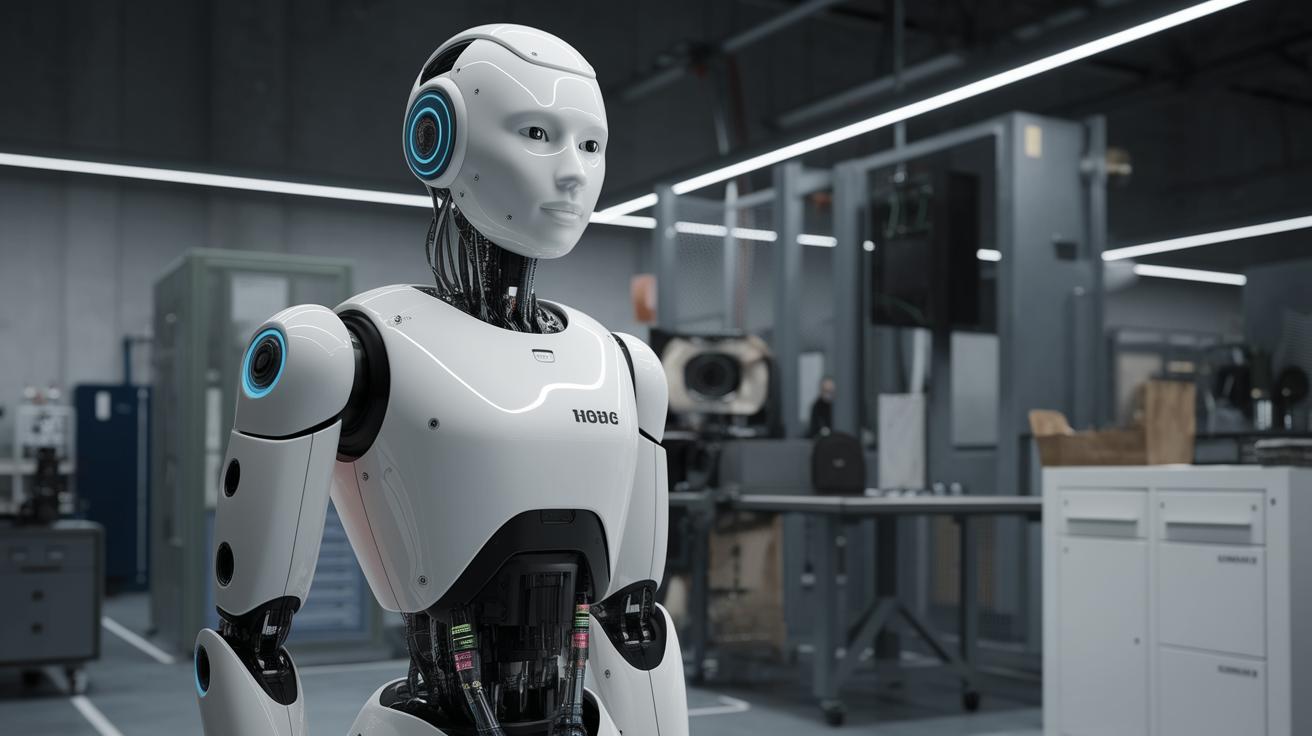
Types of Industrial Robots: The Ultimate Guide
Industrial robots have transformed manufacturing processes across numerous industries. From enhancing precision to boosting productivity, these robots come in various designs to fit specialized tasks. This comprehensive guide explores the different types of industrial robots, detailing their unique capabilities and applications. We’ll cover stationary robots like articulated and SCARA robots, autonomous mobile robots (AMRs), flying robots such as drones, and underwater robots. Each type offers specific advantages and challenges, which are crucial to understand when selecting the right robot for your industrial needs. At the end of this article, you’ll find practical insights into sourcing the perfect robotic solution tailored to your specific requirements.
Contents of this article
- How do you decide which type of industrial robot is the right fit?
- Stationary Robots (Robotic Arms)
- Articulated Robot Arms
- Cartesian or Rectangular robots
- SCARA robots
- Polar or Spherical Robots
- Delta robots
- Cylindrical robots
- Collaborative robots (cobots)
- Autonomous Mobile Robots
- Wheeled Carts
- Autonomously Guided Vehicles (AGV)
- AMRs with Robot Arms
- Legged Robots
- Spherical AMRs
- Flying Robots (Aerial Drones)
- Underwater Robots
- How to source the ideal robot type
How do you decide which type of industrial robot is the right fit?
Choosing the right type of industrial robot involves evaluating numerous factors, such as the specific tasks the robot needs to perform, the work environment, and the desired level of automation. Analyzing these criteria helps ensure that the robot will integrate seamlessly into your production line, providing value and efficiency.
Another vital consideration is the cost. Keeping the budget in line with expectations while evaluating lifecycle costs, including maintenance and potential downtime, is crucial. Additionally, compatibility with existing systems and ease of programmability should factor into the decision-making process to ensure smooth operation and implementation.
Stationary Robots (Robotic Arms)
Articulated Robot Arms
Articulated robot arms are versatile robots with rotary joints that allow for a wide range of movement. Typically consisting of four to six axes, these robots are ideal for tasks such as welding, painting, and assembly. Their flexibility and precision make them a popular choice in manufacturing environments needing adaptability.
These robots can mimic the motions of a human arm, and their versatility makes them suitable for complex and varied tasks. Their precision and speed are especially beneficial in settings where accuracy and repeatability are crucial, such as in automotive production or electronics manufacturing.
Cartesian or Rectangular Robots
Cartesian robots, also known as gantry robots, operate on three linear axes (X, Y, and Z) and are known for their precision and simplicity. These robots perform well in applications requiring consistent and straightforward movements, such as CNC machining or pick-and-place tasks.
The simplicity of their mechanical design makes them reliable and cost-effective. Furthermore, their structured linear movement provides high levels of repeatability and accuracy, making them ideal for environments where space is adequate.
SCARA Robots
Selective Compliance Articulated Robot Arm (SCARA) robots are specialized for tasks that require precise lateral movement, such as assembly processes. SCARA robots are known for their speed and high precision, making them ideal for pick-and-place, mounting, and assembly operations.
The SCARA robot’s unique design allows it to maintain rigidity in the Z-axis while providing smooth movement across the X and Y axes, optimizing its performance in horizontal operations. This capability is particularly useful in industries such as electronics and packaging.
Polar or Spherical Robots
Polar robots have one linear and two rotary joints, providing a spherical working envelope. This design is particularly useful in tasks that require reaching into and around complex spaces. Their application often includes handling glass, casting processes, and certain welding operations.
These robots’ ability to operate within spherical coordinates allows them to access difficult areas, making their design suitable for operating in tight or unusual spaces where other robot types may not fit efficiently.
Delta Robots
Delta robots, known for their speed and precision, typically consist of three arms connected to universal joints at the base. Their unique structure makes them perfect for high-speed pick-and-place actions, especially in food processing and pharmaceutical industries.
The lightweight design of delta robots enables rapid acceleration and deceleration, which is particularly advantageous in automated processes that demand quick action and precision. This type of robot excels in environments where speed is critical to productivity.
Cylindrical Robots
Cylindrical robots have a rotary joint at the base and at least one prismatic joint to connect links. This layout gives them the ability to function within a cylindrical space, with applications spanning from assembly operations to material handling.
The cylindrical robot’s design allows vertical movement and rotation without the complexity of additional axes. This simplicity and extensive reach make them favored in tasks that require access over a product or when vertical operation is needed.
Collaborative Robots (Cobots)
Collaborative robots, or cobots, are designed to work safely alongside humans in shared workspaces. They have built-in safety features like sensors and force limitations to prevent accidents during interaction, making them ideal for environments where humans and robots coexist.
Cobots are increasingly used in applications that require flexibility and adaptability, such as small-batch manufacturing and testing processes. Their user-friendly programming and redeployment capabilities make them versatile and cost-effective for companies seeking to integrate automation incrementally.
Autonomous Mobile Robots
Wheeled Carts
Wheeled carts are basic forms of mobile robots designed to transport materials across warehouse floors or manufacturing facilities. These robots can follow set paths or be programmatically controlled to optimize logistical workflows, saving time and labor costs.
The simplicity of these robots makes them an accessible introduction to robotics automation. Their efficiency in repetitive material handling tasks can significantly enhance productivity in a cost-effective manner, especially in logistics and supply chain operations.
Autonomously Guided Vehicles (AGV)
AGVs are equipped with sensors and markers that enable them to navigate predefined paths within the industrial environment, often used in smart warehouses and production plants. They efficiently transport goods, parts, and raw materials with reliable precision.
The integration of AGVs in industrial settings reduces human dependency for mundane transport tasks, improves safety by reducing accidents, and streamlines operations by optimizing route and timing, leading to enhanced operational efficiency.
AMRs with Robot Arms
AMRs equipped with robotic arms extend the functionality of mobile robots by allowing them to interact with their environment through advanced manipulation tasks. These systems can pick items, conduct inspections, and work autonomously alongside humans.
The advanced navigation and versatility of AMRs with robotic arms make them suitable for dynamic environments like warehouses and assembly lines, offering flexibility and scalability for various industrial applications.
Legged Robots
Legged robots emulate biological systems to navigate challenging terrains where wheels or tracks might fail. These robots are utilized in research and niche industrial applications requiring mobility over uneven surfaces not easily accessible by conventional robots.
The adaptations of legged robots mark significant advancements in robotic autonomy and mobility, making them highly suitable for environments demanding versatile navigation capabilities, such as construction sites or disaster response scenarios.
Spherical AMRs
Spherical AMRs, known for their unique ball-like structure, are driven from their internal mechanism, allowing movement in any direction. This capability makes them ideal for navigating tight spaces or environments that require omnidirectional movement.
Such robots are typically used in laboratory settings or areas with specific navigation challenges. The spherical design allows for creative implementations in applications requiring increased maneuverability and compactness.
Flying Robots (Aerial Drones)
Aerial drones, or flying robots, are utilized in various industrial sectors for inspections, mapping, and delivery tasks. Their ability to reach inaccessible areas makes them invaluable for jobs like surveying large fields, inspecting infrastructure, or conducting aerial photography.
Drones equipped with advanced sensors and AI capabilities can process data in real-time, offering actionable insights for industries like agriculture, mining, and construction. Their flexibility and adaptability make drones an essential tool for modern industrial applications.
Underwater Robots
Underwater robots, or remotely operated vehicles (ROVs), are essential for deep-sea exploration, underwater inspection, and maintenance tasks. These robots are capable of navigating submerged environments, transmitting data back to operators for real-time analysis.
The robustness and precision of underwater robots support critical operations such as inspecting oil pipelines, researching marine biology, or exploring underwater wrecks. Their ability to withstand hostile underwater conditions makes them indispensable for marine operations.
How to source the ideal robot type
Sourcing the right robot involves understanding your specific operational requirements, production goals, and budget constraints. Partnering with experienced suppliers who offer customization and support services can ensure your robotic solution aligns with your industrial objectives.
Network within your industry, attend trade shows and consult with robotic experts to gain a clear perspective on the latest advancements and trends, ensuring that your investment in robotics delivers the maximum return in efficiency, productivity, and innovation for your enterprise.
Lessons Learned
| Type of Robot | Description |
|---|---|
| Stationary Robots | Fixed in place, providing precision and efficiency in repetitive tasks. |
| Autonomous Mobile Robots | Mobile solutions for dynamic logistics and operational flexibility. |
| Flying Robots | Drones providing aerial capabilities for inspections and data collection. |
| Underwater Robots | ROVs for navigation and operations in aquatic environments. |